
What Growth Asks of Us
September 2026 Letter to Our Clients
Today is demo day. As I write this, we have a crew in the Center for Conscious Wealth swinging sledgehammers and clearing the way for new offices, bathrooms, and kitchen.
I’m deeply grateful to be in a position of having our own physical location, and I never imagined this would even be possible.
When I began working at Merrill Lynch 16 years ago, I was assigned a seat at a desk with 7 other advisors. (Think: Boiler Room.) There were 15 people in total in the room, all talking at the same time without any real cubicles or sound panels. My account minimum was $25,000, and I was just hoping I’d “make it” as an advisor.
Now, here we are today, building out a Center that will serve as a gathering spot, supper club, and, equally important, our offices. We intend to invite our clients and other purpose-driven leaders to co-work, co-invest, and find nourishment.
There’s one thing I keep coming back to: If I never imagined this could happen, and it did, what else is possible? Where are my beliefs serving as limitations?
Alas, I’ll put a pin in that thought and focus on the work in front of us: construction. The first step was to empty out the building in order to make way for the workers.
A funny thing happened when we started selling all our old equipment on Facebook Marketplace. The high-end items, like designer chairs, went like hotcakes. People didn’t bat an eye and paid the $250 discounted price. On the other hand, the quality items we’d listed for pennies on the dollar, like $15 chairs, had no takers. Those only got random messages like, “Is this still available?” (If you’ve ever used Facebook Marketplace, you get it.)
This dichotomy reflects the greater wealth divide in the United States. If you look at the topline numbers, the economy is doing pretty well. But, when you dig a bit deeper, you see that the bulk of the money being spent, or a significant contribution to GDP, is coming from consumption by the wealthiest Americans and investment in, you guessed it, AI.
Moody’s Analytics estimates that the top 10% of U.S. households by income accounted for 45.8% of consumer spending in 2025. That share has risen substantially from roughly one-third in the early 1990s.1
Sure, the Federal Reserve’s preferred index, PCE* inflation, is only at 2.4%, but that doesn’t include food or gas, and gas keeps going up in price for many reasons, mostly because we’re engaged in a war with Iran. The concern is that when gas goes up, the price of everything follows.
Fed Chairman Kevin Warsh recently said inflation may not fall below the government’s 2% target until 2029. Yikes! That’s a long time.
So, what does that mean for us?
For Americans in general, it will continue to be tough out there. Declining economic conditions and decreased social mobility impact us all. Those implications are a bit beyond this monthly letter.
For our investors, however, it means we can’t afford to not be investing in growth assets.
Sure, we can lower our spending and make modifications to what we spend our money on. But we the investors are fortunate because we have potential to offset inflation through asset growth. This not only impacts our financial standing, it impacts our outlook.
You can see it in the data. In a recent University of Michigan survey, the top third of stockholders were 20.5 points more optimistic than non-stockholders, and 23.8 points above the bottom third of stockholders. The gap was even larger when respondents were asked about current economic conditions: 72.5 points for the top third compared with 41.8 points for the bottom third.2
Rounding it out, what should one do?
In a word, invest!
The Center for Conscious Wealth is an investment for us and in our community of clients and leaders. We will continue to build with faith and courage in the future.
And at Conscious Wealth, despite concerns around AI, global instability, and geopolitical risks, we will continue to invest in growth assets. Sure, we temper the risk with cash and fixed income, but we are investors, and that is what we do
In Abundance,
Brandon Hatton,
CEO & Chief Investment Officer
1. Bloomberg, “The K-Shaped Economy’s Defining Statistic Has Some Problems,” April 7, 2026.
2. Econ Data Tools, “August 2026 Michigan Stock Ownership Sentiment.”
https://www.econdatatools.com/news/august-2026-michigan-stock-ownership-sentiment
*U.S. Bureau of Economic Analysis, “Personal Consumption Expenditures Price Index, Excluding Food and Energy.”
Subscribe
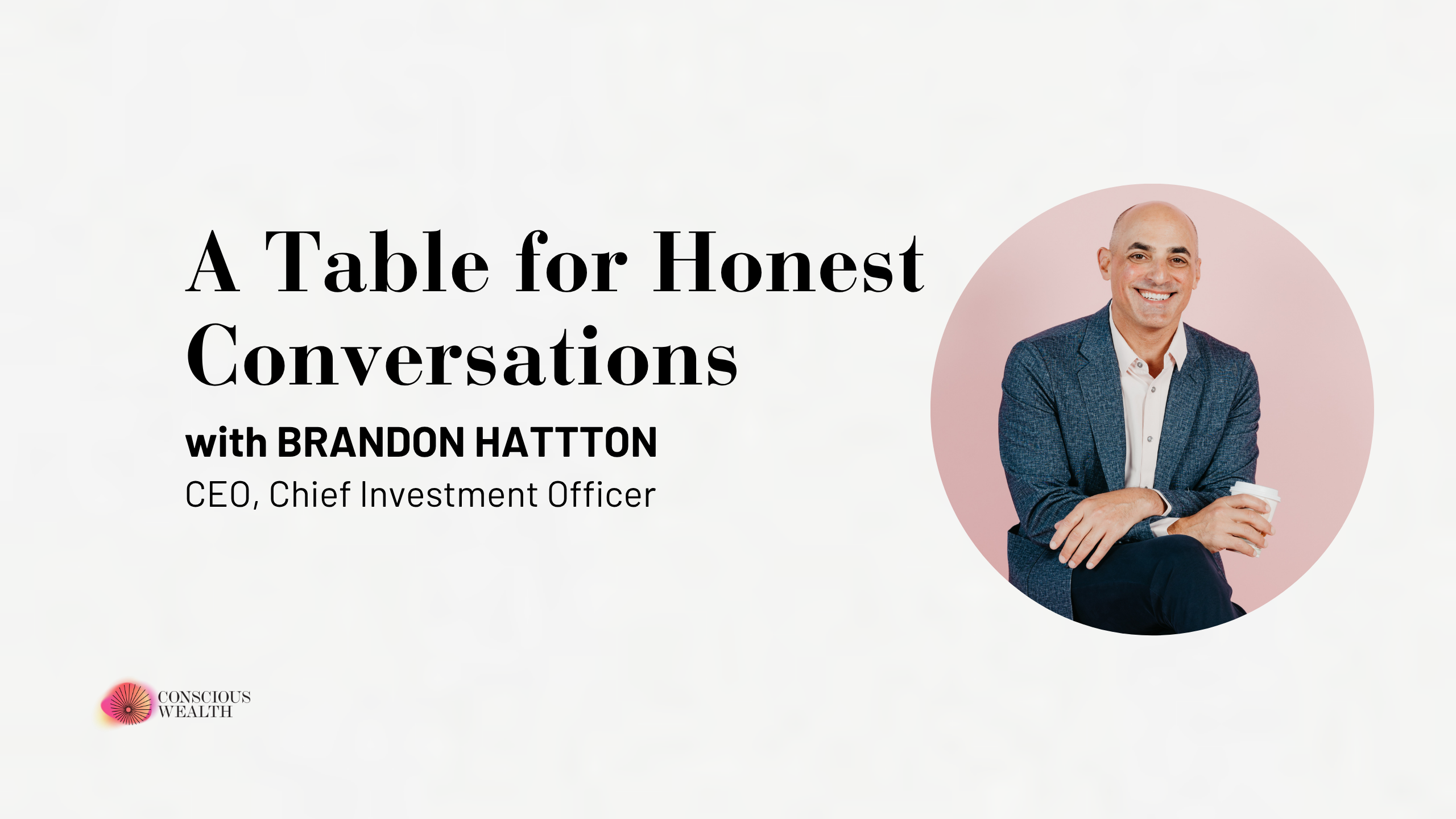
A Table for Honest Conversations
What is the purpose of money? Forget that question. It is a stupid question. Okay, perhaps not stupid. But it will lead to soapboxing and pontificating.
Read Now >>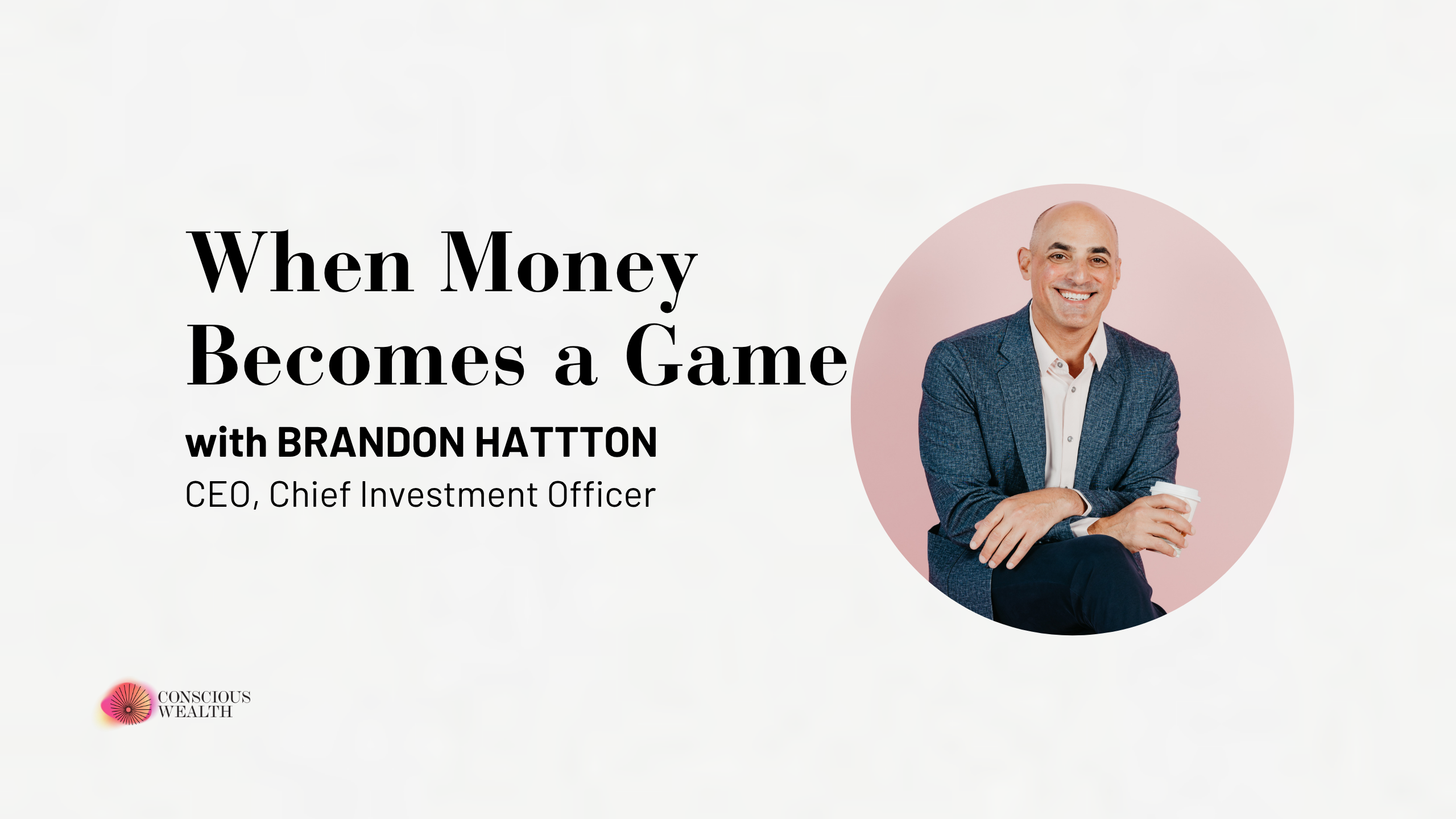
When Money Becomes a Game
What is happening in the prediction markets is very concerning! Prediction markets are a relatively new form of speculation where people can place financial bets on everything from elections and economic outcomes to cultural events and public figures. Prediction or more aptly named Gambling markets require your attention because they most likely hold the attention of someone you love.They can also slowly, or quite rapidly, eat away at your life’s work.
Read Now >>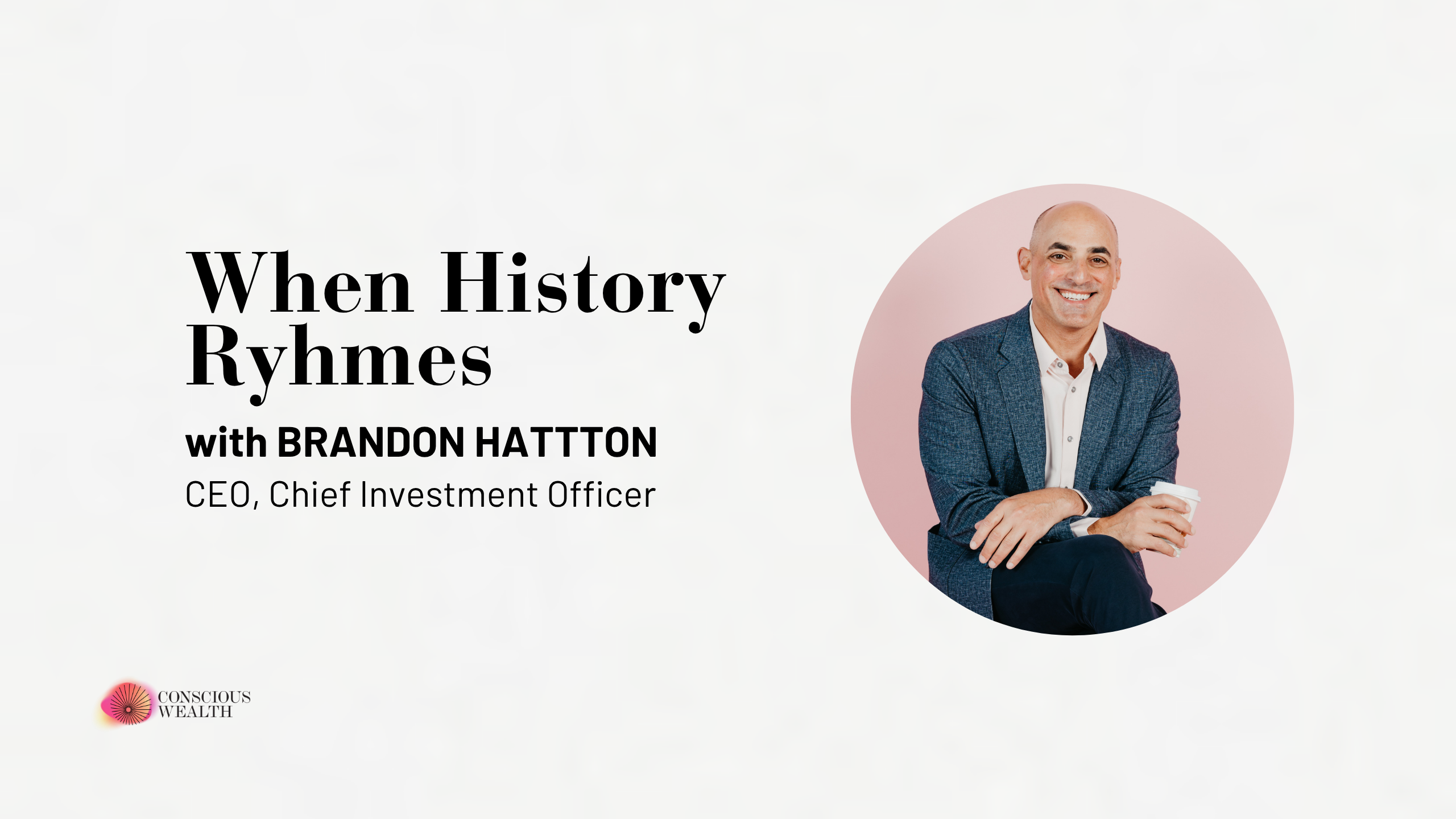
When History Rhymes
There are moments in history that feel distant…until they begin to rhyme with the present. Unless you live under a rock, which is admittedly tempting these days, you’re probably looking at the situation of the Strait of Hormuz, as well as rising geopolitical tensions in the Middle East, and thinking about what it could all mean for markets, inflation, and the broader economy.
Read Now >>September 2026 Letter to Our Clients
Today is demo day. As I write this, we have a crew in the Center for Conscious Wealth swinging sledgehammers and clearing the way for new offices, bathrooms, and kitchen.
I’m deeply grateful to be in a position of having our own physical location, and I never imagined this would even be possible.
When I began working at Merrill Lynch 16 years ago, I was assigned a seat at a desk with 7 other advisors. (Think: Boiler Room.) There were 15 people in total in the room, all talking at the same time without any real cubicles or sound panels. My account minimum was $25,000, and I was just hoping I’d “make it” as an advisor.
Now, here we are today, building out a Center that will serve as a gathering spot, supper club, and, equally important, our offices. We intend to invite our clients and other purpose-driven leaders to co-work, co-invest, and find nourishment.
There’s one thing I keep coming back to: If I never imagined this could happen, and it did, what else is possible? Where are my beliefs serving as limitations?
Alas, I’ll put a pin in that thought and focus on the work in front of us: construction. The first step was to empty out the building in order to make way for the workers.
A funny thing happened when we started selling all our old equipment on Facebook Marketplace. The high-end items, like designer chairs, went like hotcakes. People didn’t bat an eye and paid the $250 discounted price. On the other hand, the quality items we’d listed for pennies on the dollar, like $15 chairs, had no takers. Those only got random messages like, “Is this still available?” (If you’ve ever used Facebook Marketplace, you get it.)
This dichotomy reflects the greater wealth divide in the United States. If you look at the topline numbers, the economy is doing pretty well. But, when you dig a bit deeper, you see that the bulk of the money being spent, or a significant contribution to GDP, is coming from consumption by the wealthiest Americans and investment in, you guessed it, AI.
Moody’s Analytics estimates that the top 10% of U.S. households by income accounted for 45.8% of consumer spending in 2025. That share has risen substantially from roughly one-third in the early 1990s.1
Sure, the Federal Reserve’s preferred index, PCE* inflation, is only at 2.4%, but that doesn’t include food or gas, and gas keeps going up in price for many reasons, mostly because we’re engaged in a war with Iran. The concern is that when gas goes up, the price of everything follows.
Fed Chairman Kevin Warsh recently said inflation may not fall below the government’s 2% target until 2029. Yikes! That’s a long time.
So, what does that mean for us?
For Americans in general, it will continue to be tough out there. Declining economic conditions and decreased social mobility impact us all. Those implications are a bit beyond this monthly letter.
For our investors, however, it means we can’t afford to not be investing in growth assets.
Sure, we can lower our spending and make modifications to what we spend our money on. But we the investors are fortunate because we have potential to offset inflation through asset growth. This not only impacts our financial standing, it impacts our outlook.
You can see it in the data. In a recent University of Michigan survey, the top third of stockholders were 20.5 points more optimistic than non-stockholders, and 23.8 points above the bottom third of stockholders. The gap was even larger when respondents were asked about current economic conditions: 72.5 points for the top third compared with 41.8 points for the bottom third.2
Rounding it out, what should one do?
In a word, invest!
The Center for Conscious Wealth is an investment for us and in our community of clients and leaders. We will continue to build with faith and courage in the future.
And at Conscious Wealth, despite concerns around AI, global instability, and geopolitical risks, we will continue to invest in growth assets. Sure, we temper the risk with cash and fixed income, but we are investors, and that is what we do
In Abundance,
Brandon Hatton,
CEO & Chief Investment Officer
1. Bloomberg, “The K-Shaped Economy’s Defining Statistic Has Some Problems,” April 7, 2026.
2. Econ Data Tools, “August 2026 Michigan Stock Ownership Sentiment.”
https://www.econdatatools.com/news/august-2026-michigan-stock-ownership-sentiment
*U.S. Bureau of Economic Analysis, “Personal Consumption Expenditures Price Index, Excluding Food and Energy.”

