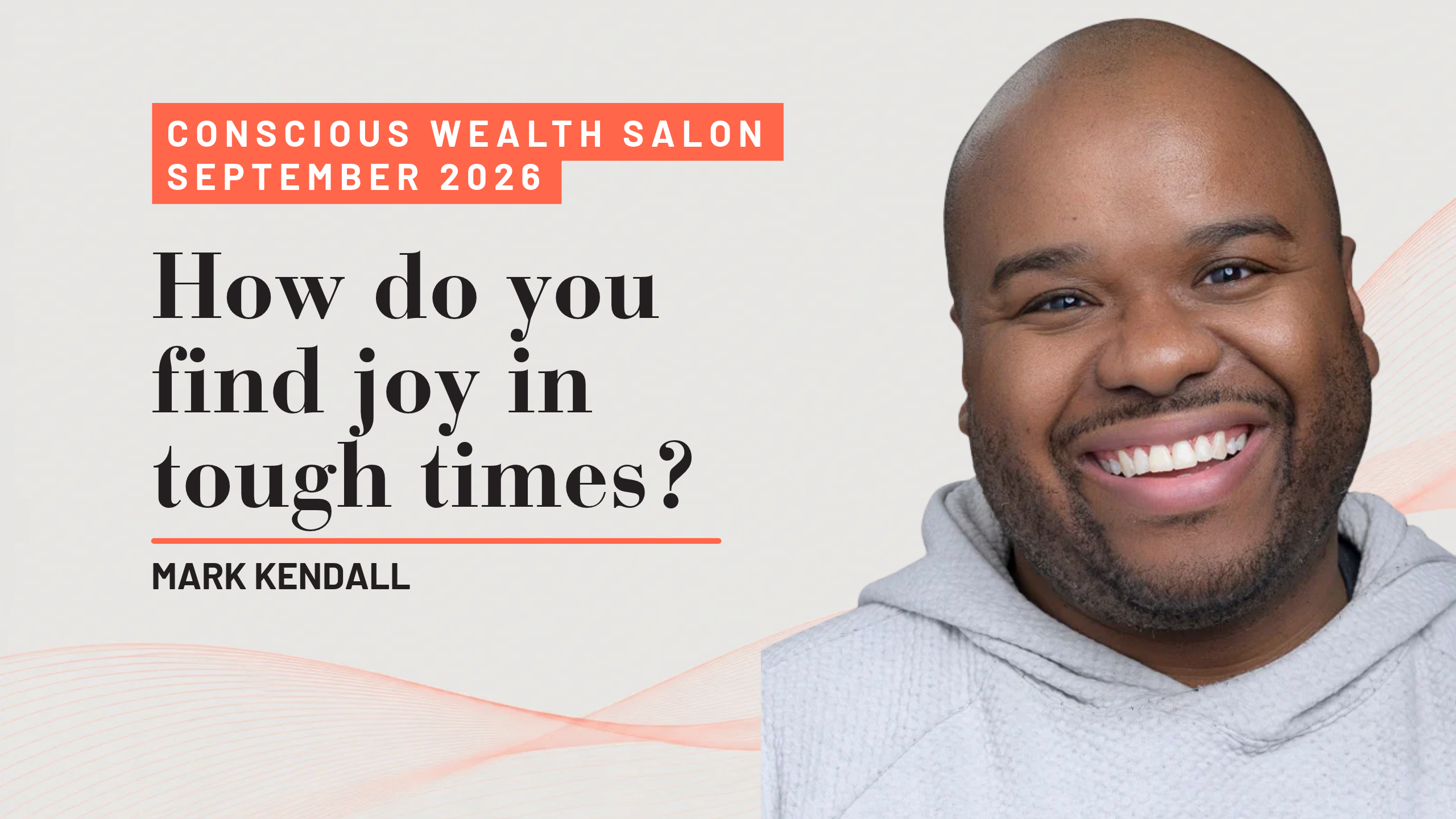
Clay Pender joins Brandon Hatton to define health, discuss WHO physical activity guidelines, simple movement habits, and the long-term costs of inactivity.
How do health and wealth connect? Brandon Hatton speaks with Conscious Wealth manager Clay Pender, who recently helped his teammates set a world record in the men’s indoor 4×800 relay, about a broader view of health. Drawing on the World Health Organization’s definition of health, they discuss how physical, mental, and social well-being are connected.
Clay shares the WHO’s adult activity guidance and global data on inactivity, including its projected health-care costs. They also offer practical ways to get moving, from walking to strength training, and discuss how a simple cue—like walking after a meal—can help make activity a habit. Clay’s advice is to start where you are; even 15 minutes is better than doing nothing. Brandon also mentions Eric Levitan’s Team Vivo, a program for older adults.
Welcome to the Conscious Wealth Studios.
Today we have wealth manager Clay
Pender. Clay, welcome to the studios and
congratulations on your world record.
Thank you. Yeah, excited to be here.
First uh been with the company a little
bit. First time recording. So,
first time you're recording and you just
glossed right over your world record.
Okay. Not only you're a wealth manager
for conscious wealth, but you set a
record and it wasn't in hot dog eating.
That's correct. just set a record with
three of my teammates. Uh we broke the
world record in the 4 x 800 for indoors.
That's amazing.
Each person um half mile we ran 710.
Amazing.
What was the record?
Uh 711 before so we broke it by just a
second.
Second's enough.
Yeah.
That's awesome.
Yeah.
Cool. Congratulations.
Um everyone comes in here from the team
and they're offering their unique
perspective. one of your new
perspectives is a big part of conscious
wealth which is health and so how do you
define health?
Yeah. Uh I mean obviously health is a
big part of my life. Uh run every day,
cross train, lift weights.
So what they used to say is health is
just the absence of illness. Um, so
that's just kind of taking into account
the physical part, but actually the
World Health Organization defines it as
uh physical health, mental health, and
social well-being. And so those three
all tie into um health as a whole.
Yeah. And they're so interconnected too,
right? Like
Yeah.
How like your physical health has to do
with your emotional health, which has to
do with like your sense of
connectedness.
How are we as Americans doing in
physical health?
Uh not so much. And I I think that
that's pretty apparent of everything
that we're uh that we're seeing every
day is uh see that we're only getting
more sedentary. Uh we're getting less
healthy. Um obviously fast food um a lot
more technology keeps people inside, not
getting um outside. And
I know you love some Chick-fil-A.
I do. I do love Chick-fil-A. also run 10
miles of
try to stay away from it. Uh try to stay
away from a lot of the processed stuff,
but Chick-fil-A's got a little bit of a
hold on me.
Yeah. All right. So, what are the I know
you brought some statistics. What are
some of the statistics you were looking
at? And then let's quickly jump into
then um some ways to combat it, but
maybe what are your what are two
statistics that stand out for you as you
were researching those?
Yeah. So, one of the statistics that
stood out to me was that 31% of adults
actually don't hit the minimum uh
physical activity uh recommendations
that World Health Organization has put
out there. Um the what they suggest is a
minimum of 150 minutes per week. So,
it's like 20 minutes a day.
Whoa. People aren't doing 20 minutes a
day.
Not 20 minutes a day. So,
one in three people are not doing 20
minutes a day. Wow. In the United
States.
In the world. in the world. Okay. Oh,
wow. Okay.
So, the next statistic that I wanted to
bring up kind of piggybacks off of that
and it was talking that we're gonna
spend over the decade between 2020 and
2030, we're going to spend $300 billion
on health care just due to physical
inactivity.
And that's the real connection to
financial planning and wealth management
is you can spend money on this on the
back end or you can get ahead of it and
you can be physically active. Exactly.
Yeah. Yeah. Yeah. And so like a healthy
lifestyle is way better than a long-term
care policy that we could and maybe
probably
Yeah. Yeah. Yeah. Yeah. Yeah. So, uh, as
a professional athlete, as you are,
what, uh, recommendations do you have
for people?
Yeah. I mean, I don't like to talk about
a problem without having a solution. So,
um, some solutions, I mean, get out, go
for a walk. Like, like I said, 20
minutes a day is uh not not a ton. We
all have an extra 20 minutes that we
could spend on our well-being and
longevity. So, uh if you're already
doing something like that, maybe take a
next step, maybe run, maybe uh you want
to go to the gym, lift weights. So, uh
within the 150 minutes minimum, they
also say that um adults should be
getting at least two days a week of some
sort of muscular exercises.
Yes, we're seeing that really big. Eric
Levitan, a friend of our conscious
wealth, is also has that program uh
where he's helping uh older adults build
muscle mass, which is so important. I
love the idea of taking a walk right
after a meal. Not only is it good for
your metabolism, when you attach it to a
meal, you create a habit like now I eat,
now I walk.
Yeah, those are both great ideas. Thank
you.
Yeah. Yeah. So, yeah, I mean, I would
say you everybody can start somewhere.
Um, if you're going from a sedentary
lifestyle, start with walking. Uh, 20,
30 minutes. It be great. And I mean, any
movement is better than no movement. So,
maybe maybe only have 15 minutes. Um,
yeah,
do do the 15 instead of just like I
don't have time. Let's do
it. Yeah, that's a great any movement is
better than no movement. Yeah.
Awesome. Thanks, Clay. Thanks for coming
on. Coming to the studios. Yeah.
All right. Thanks, everyone. See you
next time.